Buy eurolamps.eu ?
We are moving the project
eurolamps.eu .
Are you interested in purchasing the domain
eurolamps.eu ?
domain@kv-gmbh.de · 0541-91531010
Buy eurolamps.eu ?
Is the nomenclature correct?
Yes, the nomenclature is correct. The term "nomenclature" refers to the system of naming things, and in this context, it is being used to ask if the names or terms being used are accurate and appropriate. As long as the names being used accurately describe the concepts or objects they are referring to, then the nomenclature can be considered correct. **
What is Nomenclature 9?
Nomenclature 9 is a system of naming chemical compounds and elements. It is a set of rules and guidelines established by the International Union of Pure and Applied Chemistry (IUPAC) to ensure that chemical names are standardized and consistent across the scientific community. Nomenclature 9 provides a framework for naming organic and inorganic compounds, as well as elements, based on their chemical structure and properties. It is an essential tool for chemists and researchers to communicate effectively and accurately about chemical substances. **
Similar search terms for Nomenclature
Top-Angebote
Products related to Nomenclature:
-
LENA LIGHTING 608551 Hand lampsProduct line: HANDY FUTURE; Luminous Flux [lm]: 150, 60; Illumination Angle [degree]: 120; Rated Power [W]: 6; Battery Capacity [Ah]: 1200; Protection Type (IP Code): IP 20; Colour Temperature [K]: 6500; Battery: Li-Ion Rechargeable Battery; Operating voltage [V]: 3.7; Plug Type: USB type-C; Weight [g]: 160; Colour: green; Features: with hook19,49 £*Shipping: 8,45 £Secure redirect to the provider
-
LENA LIGHTING 608568 Hand lampsProduct line: HANDY MULTY; Light Duration [h]: 2.5; Operational Duration up to [h]: 4; Light Design: LED; Luminous Flux [lm]: 240, 400; Illumination Angle [degree]: 120; Rated Power [W]: 5, 6; Battery Capacity [Ah]: 2000; Features: IK 10; Protection Type (IP Code): IP 40; Colour Temperature [K]: 6500; Battery: Li-Ion Rechargeable Battery; Plug Type: USB type-C; Operating voltage [V]: 3.7; Weight [g]: 274; Features: foldable; Colour: green26,99 £*Shipping: 8,45 £Secure redirect to the provider
-
Uplift Picks Plastic Sewing Fixtures Set Beginner Sewing Tools For Hand Sewing Plastic Sewing Fixtures Set Beginner Sewing Tools For Hand SewingMake everyday sewing easier and more enjoyable with these practical sewing fixtures designed for simple, handson projects. Lightweight and easy to handle, they help guide fabric and improve control while stitching. The bright yellow and white design...47,00 $*Shipping: 0,00 $Secure redirect to the provider



-
What is the correct nomenclature?
The correct nomenclature refers to the system of naming things in a specific field or discipline according to established rules and conventions. It ensures clarity, consistency, and precision in communication, allowing for accurate identification and categorization of objects, organisms, or concepts. In scientific fields, correct nomenclature is crucial for avoiding confusion and facilitating effective communication among researchers. **
-
What is nomenclature in chemistry?
Nomenclature in chemistry refers to the system of naming chemical compounds and elements according to specific rules and conventions. This naming system helps to standardize the way chemicals are identified and communicated, making it easier for scientists to understand and work with different substances. Nomenclature also helps to avoid confusion and ensure that chemicals are accurately identified and described in scientific literature and communication. **
-
What is the nomenclature of alcohols?
The nomenclature of alcohols follows a specific set of rules based on the IUPAC system. In this system, alcohols are named by replacing the -e at the end of the corresponding alkane name with -ol. The longest carbon chain containing the hydroxyl group is identified as the parent chain, and the position of the hydroxyl group is indicated by the lowest possible number. If there are multiple hydroxyl groups, the prefixes di-, tri-, etc., are used to indicate the number of hydroxyl groups present. **
-
What are the tasks of nomenclature?
The main tasks of nomenclature are to establish a system of names for organisms in order to provide a standardized way of referring to them. This helps in communication among scientists and ensures clarity and accuracy in the identification of species. Nomenclature also helps in organizing and categorizing the vast diversity of life on Earth, making it easier to study and understand the relationships between different organisms. Additionally, nomenclature plays a crucial role in conservation efforts by providing a framework for identifying and protecting endangered species. **

What is the nomenclature of halogenoalkanes?
Halogenoalkanes are named using the IUPAC system, where the halogen atom is treated as a substituent on an alkane chain. The halogen is named as a prefix (fluoro-, chloro-, bromo-, iodo-) followed by the alkane name indicating the number of carbon atoms in the longest chain. The position of the halogen atom is indicated by the number of the carbon atom it is attached to, starting from the end nearest to the halogen. If there are multiple halogen atoms, the positions are indicated by numbers separated by commas. **
What is the nomenclature of alkanes?
The nomenclature of alkanes follows a specific set of rules established by the International Union of Pure and Applied Chemistry (IUPAC). Alkanes are named based on the number of carbon atoms in the longest continuous chain, with the suffix "-ane" indicating that it is an alkane. If there are branches or substituents attached to the main chain, they are named as alkyl groups and their positions are indicated using numbers. The goal of the nomenclature system is to provide a unique and systematic way to name organic compounds based on their structure. **
Top-Angebote
Products related to Nomenclature:
-
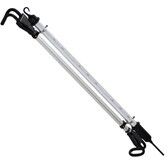
LENA LIGHTING 267215 Hand lampsLight Design: LED; Product line: PROFI SERVICE SET; Luminous Flux [lm]: 1200; Illumination Angle [degree]: 120; Rated Power [W]: 12; Protection Type (IP Code): IP 54; Colour Temperature [K]: 4000; Length [mm]: 1090; Cable Length [m]: 5; Weight [kg]: 1.1; Voltage [V]: 230; Features: wired; Supplementary Article / Supplementary Info Info 2: with clip72,99 £*Shipping: 8,45 £Secure redirect to the provider
-
LENA LIGHTING 334764 Hand lampsProduct line: CRANE; Light Duration [h]: 3; Operational Duration up to [h]: 5.5; Light Design: LED; Luminous Flux [lm]: 120, 450; Illumination Angle [degree]: 120; Rated Power [W]: 1, 5; Battery Capacity [Ah]: 2600; Protection Type (IP Code): IP 40; Colour Temperature [K]: 6500; Battery: Li-Ion Rechargeable Battery; Plug Type: USB type-C; Operating voltage [V]: 3.7; Weight [g]: 49044,99 £*Shipping: 8,45 £Secure redirect to the provider
-
LENA LIGHTING 608551 Hand lampsProduct line: HANDY FUTURE; Luminous Flux [lm]: 150, 60; Illumination Angle [degree]: 120; Rated Power [W]: 6; Battery Capacity [Ah]: 1200; Protection Type (IP Code): IP 20; Colour Temperature [K]: 6500; Battery: Li-Ion Rechargeable Battery; Operating voltage [V]: 3.7; Plug Type: USB type-C; Weight [g]: 160; Colour: green; Features: with hook19,49 £*Shipping: 8,45 £Secure redirect to the provider
-
LENA LIGHTING 608568 Hand lampsProduct line: HANDY MULTY; Light Duration [h]: 2.5; Operational Duration up to [h]: 4; Light Design: LED; Luminous Flux [lm]: 240, 400; Illumination Angle [degree]: 120; Rated Power [W]: 5, 6; Battery Capacity [Ah]: 2000; Features: IK 10; Protection Type (IP Code): IP 40; Colour Temperature [K]: 6500; Battery: Li-Ion Rechargeable Battery; Plug Type: USB type-C; Operating voltage [V]: 3.7; Weight [g]: 274; Features: foldable; Colour: green26,99 £*Shipping: 8,45 £Secure redirect to the provider
-
Is the nomenclature correct?
Yes, the nomenclature is correct. The term "nomenclature" refers to the system of naming things, and in this context, it is being used to ask if the names or terms being used are accurate and appropriate. As long as the names being used accurately describe the concepts or objects they are referring to, then the nomenclature can be considered correct. **
-
What is Nomenclature 9?
Nomenclature 9 is a system of naming chemical compounds and elements. It is a set of rules and guidelines established by the International Union of Pure and Applied Chemistry (IUPAC) to ensure that chemical names are standardized and consistent across the scientific community. Nomenclature 9 provides a framework for naming organic and inorganic compounds, as well as elements, based on their chemical structure and properties. It is an essential tool for chemists and researchers to communicate effectively and accurately about chemical substances. **
-
What is the correct nomenclature?
The correct nomenclature refers to the system of naming things in a specific field or discipline according to established rules and conventions. It ensures clarity, consistency, and precision in communication, allowing for accurate identification and categorization of objects, organisms, or concepts. In scientific fields, correct nomenclature is crucial for avoiding confusion and facilitating effective communication among researchers. **
-
What is nomenclature in chemistry?
Nomenclature in chemistry refers to the system of naming chemical compounds and elements according to specific rules and conventions. This naming system helps to standardize the way chemicals are identified and communicated, making it easier for scientists to understand and work with different substances. Nomenclature also helps to avoid confusion and ensure that chemicals are accurately identified and described in scientific literature and communication. **
Similar search terms for Nomenclature
-
Uplift Picks Plastic Sewing Fixtures Set Beginner Sewing Tools For Hand Sewing Plastic Sewing Fixtures Set Beginner Sewing Tools For Hand SewingMake everyday sewing easier and more enjoyable with these practical sewing fixtures designed for simple, handson projects. Lightweight and easy to handle, they help guide fabric and improve control while stitching. The bright yellow and white design...47,00 $*Shipping: 0,00 $Secure redirect to the provider
-
What is the nomenclature of alcohols?
The nomenclature of alcohols follows a specific set of rules based on the IUPAC system. In this system, alcohols are named by replacing the -e at the end of the corresponding alkane name with -ol. The longest carbon chain containing the hydroxyl group is identified as the parent chain, and the position of the hydroxyl group is indicated by the lowest possible number. If there are multiple hydroxyl groups, the prefixes di-, tri-, etc., are used to indicate the number of hydroxyl groups present. **
-
What are the tasks of nomenclature?
The main tasks of nomenclature are to establish a system of names for organisms in order to provide a standardized way of referring to them. This helps in communication among scientists and ensures clarity and accuracy in the identification of species. Nomenclature also helps in organizing and categorizing the vast diversity of life on Earth, making it easier to study and understand the relationships between different organisms. Additionally, nomenclature plays a crucial role in conservation efforts by providing a framework for identifying and protecting endangered species. **
-
What is the nomenclature of halogenoalkanes?
Halogenoalkanes are named using the IUPAC system, where the halogen atom is treated as a substituent on an alkane chain. The halogen is named as a prefix (fluoro-, chloro-, bromo-, iodo-) followed by the alkane name indicating the number of carbon atoms in the longest chain. The position of the halogen atom is indicated by the number of the carbon atom it is attached to, starting from the end nearest to the halogen. If there are multiple halogen atoms, the positions are indicated by numbers separated by commas. **
-
What is the nomenclature of alkanes?
The nomenclature of alkanes follows a specific set of rules established by the International Union of Pure and Applied Chemistry (IUPAC). Alkanes are named based on the number of carbon atoms in the longest continuous chain, with the suffix "-ane" indicating that it is an alkane. If there are branches or substituents attached to the main chain, they are named as alkyl groups and their positions are indicated using numbers. The goal of the nomenclature system is to provide a unique and systematic way to name organic compounds based on their structure. **
* All prices are inclusive of VAT and, if applicable, plus shipping costs. The offer information is based on the details provided by the respective shop and is updated through automated processes. Real-time updates do not occur, so deviations can occur in individual cases. ** Note: Parts of this content were created by AI.