Buy eurolamps.eu ?
We are moving the project
eurolamps.eu .
Are you interested in purchasing the domain
eurolamps.eu ?
domain@kv-gmbh.de · 0541-91531010
Buy eurolamps.eu ?
Can LED lamps be used in enclosed fixtures?
Yes, LED lamps can be used in enclosed fixtures. However, it is important to choose LED lamps that are specifically designed for use in enclosed fixtures to ensure proper ventilation and heat dissipation. Using LED lamps that are not designed for enclosed fixtures can lead to overheating and reduced lifespan of the bulbs. Always check the manufacturer's specifications and recommendations before using LED lamps in enclosed fixtures. **
What is the difference between illumination and lighting?
Illumination refers to the overall level of light in a space, while lighting refers to the specific fixtures and sources of light used to achieve that level of illumination. In other words, illumination is the result of the combined effect of all the lighting in a space, while lighting refers to the individual components that contribute to the overall illumination. Illumination is the overall brightness of a space, while lighting refers to the specific fixtures and sources of light used to achieve that brightness. **

Similar search terms for Equation
Top-Angebote
Products related to Equation:
-
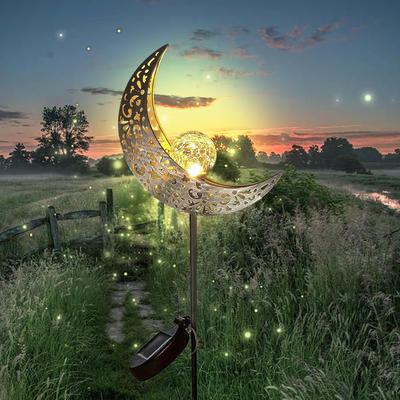
PRiME Cat Moon Shaped Iron Solar Lamp, Decorative Outdoor Garden Lighting With Automatic Sensor & Solar Powered Illumination moonEnhance Your Garden with a Magical SolarPowered GlowBring a whimsical and modern touch to your outdoor space with our Cat MoonShaped Iron Solar Lamp. Designed for both beauty and functionality, this decorative outdoor garden lighting piece...29,97 $*Shipping: 0,00 $Secure redirect to the provider
-
Uplift Picks Plastic Sewing Fixtures Set Beginner Sewing Tools For Hand Sewing Plastic Sewing Fixtures Set Beginner Sewing Tools For Hand SewingMake everyday sewing easier and more enjoyable with these practical sewing fixtures designed for simple, handson projects. Lightweight and easy to handle, they help guide fabric and improve control while stitching. The bright yellow and white design...47,00 $*Shipping: 0,00 $Secure redirect to the provider
-
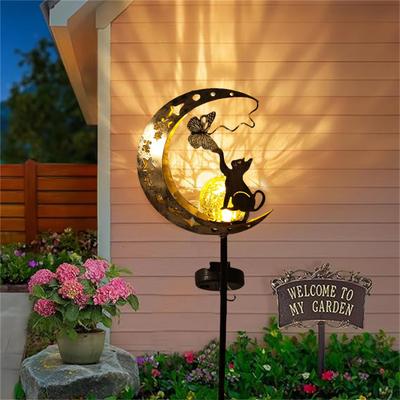
PRiME Cat Moon Shaped Iron Solar Lamp, Decorative Outdoor Garden Lighting With Automatic Sensor & Solar Powered Illumination cat MoonEnhance Your Garden with a Magical SolarPowered GlowBring a whimsical and modern touch to your outdoor space with our Cat MoonShaped Iron Solar Lamp. Designed for both beauty and functionality, this decorative outdoor garden lighting piece...29,97 $*Shipping: 0,00 $Secure redirect to the provider

-
What is the mesh equation and the node equation?
The mesh equation is a fundamental equation used in circuit analysis to calculate the current flowing in a loop of a circuit. It is based on Kirchhoff's voltage law and states that the sum of the voltage drops around a closed loop in a circuit is equal to the product of the current flowing in the loop and the total resistance of the loop. The node equation, on the other hand, is used to calculate the voltage at a specific node in a circuit. It is based on Kirchhoff's current law and states that the sum of currents entering a node is equal to the sum of currents leaving the node. This equation is used to solve for the voltage at a particular node in a circuit. **
-
'Equation and what?'
Equation and inequality are two fundamental concepts in mathematics. An equation is a statement that two expressions are equal, while an inequality is a statement that two expressions are not equal. Equations are used to find the value of a variable that makes the equation true, while inequalities are used to compare two quantities. Both equations and inequalities are essential tools in solving mathematical problems and modeling real-world situations. **
-
Is a linear equation the same as a parameter equation?
No, a linear equation and a parameter equation are not the same. A linear equation is an equation of the form y = mx + b, where m and b are constants and x and y are variables. A parameter equation, on the other hand, is an equation that contains parameters, which are variables that represent certain values in the equation. Parameter equations can be linear or non-linear, but the presence of parameters distinguishes them from regular linear equations. **
-
How can one reduce this equation to a quadratic equation?
To reduce an equation to a quadratic equation, one can use the method of substitution. By substituting a variable for a certain expression in the equation, one can transform the equation into a quadratic form. Another method is completing the square, which involves rearranging the equation to isolate the quadratic term and then adding or subtracting a constant to complete the square. Additionally, one can use the quadratic formula to solve for the roots of the equation, which can help in reducing the equation to a quadratic form. **

How can a coordinate equation be converted into a normal equation?
A coordinate equation can be converted into a normal equation by rearranging the terms to isolate the dependent variable on one side of the equation. This involves performing algebraic operations such as addition, subtraction, multiplication, and division to simplify the equation. Once the dependent variable is isolated, the equation is in normal form and can be used to solve for the variable in terms of the independent variables. This process allows for a clearer understanding of the relationship between the variables and makes it easier to analyze and interpret the equation. **
What is the second-order difference equation for an inhomogeneous equation?
The second-order difference equation for an inhomogeneous equation is of the form \(y[n] - a_1y[n-1] - a_2y[n-2] = x[n]\), where \(y[n]\) represents the output sequence, \(x[n]\) represents the input sequence, and \(a_1\) and \(a_2\) are constants. This equation describes how the current output value \(y[n]\) is related to the previous two output values \(y[n-1]\) and \(y[n-2]\), as well as the current input value \(x[n]\). The inhomogeneous term \(x[n]\) represents any external influences or disturbances acting on the system. **
Top-Angebote
Products related to Equation:
-
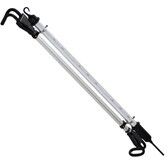
LENA LIGHTING 267215 Hand lampsLight Design: LED; Product line: PROFI SERVICE SET; Luminous Flux [lm]: 1200; Illumination Angle [degree]: 120; Rated Power [W]: 12; Protection Type (IP Code): IP 54; Colour Temperature [K]: 4000; Length [mm]: 1090; Cable Length [m]: 5; Weight [kg]: 1.1; Voltage [V]: 230; Features: wired; Supplementary Article / Supplementary Info Info 2: with clip78,49 £*Shipping: 8,45 £Secure redirect to the provider
-
LENA LIGHTING 608568 Hand lampsProduct line: HANDY MULTY; Light Duration [h]: 2.5; Operational Duration up to [h]: 4; Light Design: LED; Luminous Flux [lm]: 240, 400; Illumination Angle [degree]: 120; Rated Power [W]: 5, 6; Battery Capacity [Ah]: 2000; Features: IK 10; Protection Type (IP Code): IP 40; Colour Temperature [K]: 6500; Battery: Li-Ion Rechargeable Battery; Plug Type: USB type-C; Operating voltage [V]: 3.7; Weight [g]: 274; Features: foldable; Colour: green28,99 £*Shipping: 8,45 £Secure redirect to the provider
-
PRiME Cat Moon Shaped Iron Solar Lamp, Decorative Outdoor Garden Lighting With Automatic Sensor & Solar Powered Illumination moonEnhance Your Garden with a Magical SolarPowered GlowBring a whimsical and modern touch to your outdoor space with our Cat MoonShaped Iron Solar Lamp. Designed for both beauty and functionality, this decorative outdoor garden lighting piece...29,97 $*Shipping: 0,00 $Secure redirect to the provider
-
Can LED lamps be used in enclosed fixtures?
Yes, LED lamps can be used in enclosed fixtures. However, it is important to choose LED lamps that are specifically designed for use in enclosed fixtures to ensure proper ventilation and heat dissipation. Using LED lamps that are not designed for enclosed fixtures can lead to overheating and reduced lifespan of the bulbs. Always check the manufacturer's specifications and recommendations before using LED lamps in enclosed fixtures. **
-
What is the difference between illumination and lighting?
Illumination refers to the overall level of light in a space, while lighting refers to the specific fixtures and sources of light used to achieve that level of illumination. In other words, illumination is the result of the combined effect of all the lighting in a space, while lighting refers to the individual components that contribute to the overall illumination. Illumination is the overall brightness of a space, while lighting refers to the specific fixtures and sources of light used to achieve that brightness. **
-
What is the mesh equation and the node equation?
The mesh equation is a fundamental equation used in circuit analysis to calculate the current flowing in a loop of a circuit. It is based on Kirchhoff's voltage law and states that the sum of the voltage drops around a closed loop in a circuit is equal to the product of the current flowing in the loop and the total resistance of the loop. The node equation, on the other hand, is used to calculate the voltage at a specific node in a circuit. It is based on Kirchhoff's current law and states that the sum of currents entering a node is equal to the sum of currents leaving the node. This equation is used to solve for the voltage at a particular node in a circuit. **
-
'Equation and what?'
Equation and inequality are two fundamental concepts in mathematics. An equation is a statement that two expressions are equal, while an inequality is a statement that two expressions are not equal. Equations are used to find the value of a variable that makes the equation true, while inequalities are used to compare two quantities. Both equations and inequalities are essential tools in solving mathematical problems and modeling real-world situations. **
Similar search terms for Equation
-
Uplift Picks Plastic Sewing Fixtures Set Beginner Sewing Tools For Hand Sewing Plastic Sewing Fixtures Set Beginner Sewing Tools For Hand SewingMake everyday sewing easier and more enjoyable with these practical sewing fixtures designed for simple, handson projects. Lightweight and easy to handle, they help guide fabric and improve control while stitching. The bright yellow and white design...47,00 $*Shipping: 0,00 $Secure redirect to the provider
-
PRiME Cat Moon Shaped Iron Solar Lamp, Decorative Outdoor Garden Lighting With Automatic Sensor & Solar Powered Illumination cat MoonEnhance Your Garden with a Magical SolarPowered GlowBring a whimsical and modern touch to your outdoor space with our Cat MoonShaped Iron Solar Lamp. Designed for both beauty and functionality, this decorative outdoor garden lighting piece...29,97 $*Shipping: 0,00 $Secure redirect to the provider
-
PRiME Cat Moon Shaped Iron Solar Lamp, Decorative Outdoor Garden Lighting With Automatic Sensor & Solar Powered Illumination fairy MoonEnhance Your Garden with a Magical SolarPowered GlowBring a whimsical and modern touch to your outdoor space with our Cat MoonShaped Iron Solar Lamp. Designed for both beauty and functionality, this decorative outdoor garden lighting piece...29,97 $*Shipping: 0,00 $Secure redirect to the provider
-
Is a linear equation the same as a parameter equation?
No, a linear equation and a parameter equation are not the same. A linear equation is an equation of the form y = mx + b, where m and b are constants and x and y are variables. A parameter equation, on the other hand, is an equation that contains parameters, which are variables that represent certain values in the equation. Parameter equations can be linear or non-linear, but the presence of parameters distinguishes them from regular linear equations. **
-
How can one reduce this equation to a quadratic equation?
To reduce an equation to a quadratic equation, one can use the method of substitution. By substituting a variable for a certain expression in the equation, one can transform the equation into a quadratic form. Another method is completing the square, which involves rearranging the equation to isolate the quadratic term and then adding or subtracting a constant to complete the square. Additionally, one can use the quadratic formula to solve for the roots of the equation, which can help in reducing the equation to a quadratic form. **
-
How can a coordinate equation be converted into a normal equation?
A coordinate equation can be converted into a normal equation by rearranging the terms to isolate the dependent variable on one side of the equation. This involves performing algebraic operations such as addition, subtraction, multiplication, and division to simplify the equation. Once the dependent variable is isolated, the equation is in normal form and can be used to solve for the variable in terms of the independent variables. This process allows for a clearer understanding of the relationship between the variables and makes it easier to analyze and interpret the equation. **
-
What is the second-order difference equation for an inhomogeneous equation?
The second-order difference equation for an inhomogeneous equation is of the form \(y[n] - a_1y[n-1] - a_2y[n-2] = x[n]\), where \(y[n]\) represents the output sequence, \(x[n]\) represents the input sequence, and \(a_1\) and \(a_2\) are constants. This equation describes how the current output value \(y[n]\) is related to the previous two output values \(y[n-1]\) and \(y[n-2]\), as well as the current input value \(x[n]\). The inhomogeneous term \(x[n]\) represents any external influences or disturbances acting on the system. **
* All prices are inclusive of VAT and, if applicable, plus shipping costs. The offer information is based on the details provided by the respective shop and is updated through automated processes. Real-time updates do not occur, so deviations can occur in individual cases. ** Note: Parts of this content were created by AI.